
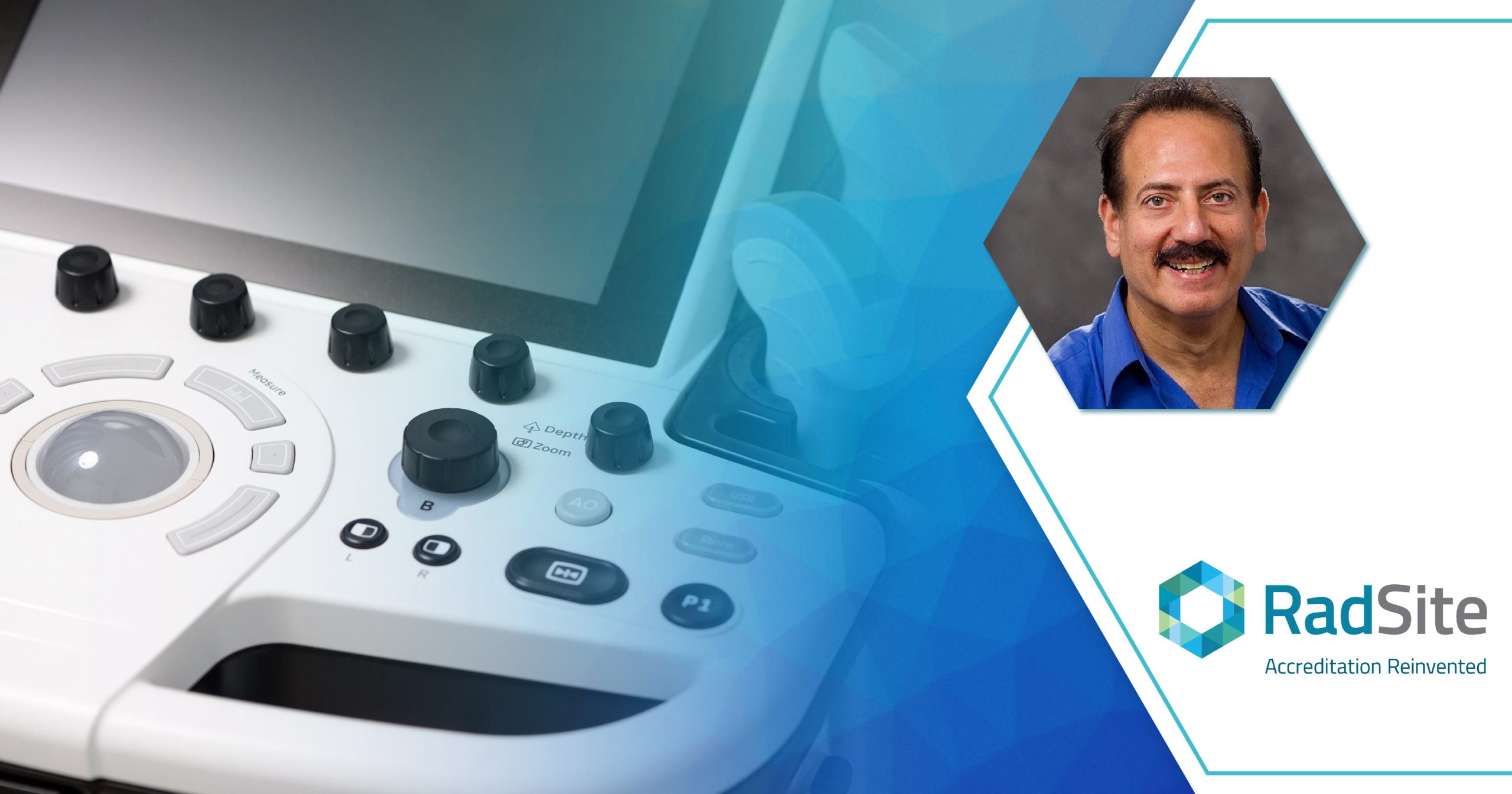
Ultrasound has become one of the most widely used imaging tools in medicine. In this interview, Dr. Eliot Siegel, an internationally recognized radiologist and leader in advanced diagnostic imaging, discusses the challenges and opportunities associated with the growing use of ultrasound, why quality can vary so widely, and how stronger standards could protect patients and support providers.
To begin, can you explain the difference between point-of-care ultrasound and more traditional uses of ultrasound?
Dr. Siegel: It is important to distinguish between point-of-care ultrasound (POCUS) and ultrasound performed in dedicated areas such as obstetrics, vascular imaging, or radiology departments. In traditional settings, patients are sent to a specialized area for a formal ultrasound scan by a trained technologist within a structured program. POCUS, by contrast, is performed directly by the treating practitioner at the bedside.
What makes ultrasound unique compared to other imaging modalities like CT or MRI?
Dr. Siegel: Ultrasound, more than any other modality, is highly operator-dependent. The quality of a scan depends heavily on the experience and expertise of the person performing the imaging. With CT or MRI, there is some variability from technologist to technologist, but it is minimal. With ultrasound, the variability can be tremendous.
What risks does that variability create in practice?
Dr. Siegel: The person interpreting an ultrasound scan cannot know what is not captured. If a technologist does not recognize pathology, they will not acquire images of it, and the interpreting physician—whether a radiologist, cardiologist, or vascular surgeon—will not know what was missed. Ironically, despite this significant variability in quality, ultrasound has less accreditation oversight than other imaging modalities.
What are some of the challenges around documentation in point-of-care ultrasound?
Dr. Siegel: In many cases, POCUS scans are not saved or stored, which is very different from radiology, cardiology, OB/GYN, or vascular imaging. Sometimes there is not even a formal report. That creates serious problems for documentation, continuity of care, and reimbursement.
You have described POCUS as something of a “Wild West.” Can you elaborate?
Dr. Siegel: Yes—anyone with a $3,000 portable ultrasound device can scan anywhere on the body. The results vary widely, depending on the practitioner’s skill. In some ways, ultrasound has become an extension of the physical exam—like palpating an abdomen or listening to heart sounds—but without formal requirements for testing, quality control, or ongoing training.
How does billing fit into these challenges?
Dr. Siegel: Billing for POCUS is highly variable. It depends on the provider, the state, and the facility. Insurers are understandably skeptical about reimbursing for POCUS if there are no reports or stored images. Without documentation, it is hard to justify payment, and it creates legal and patient safety risks.
Beyond diagnosis, what are some other uses of POCUS?
Dr. Siegel: It is extremely valuable for guiding procedures—such as paracentesis (removing excess fluid from the abdomen), thoracentesis (removing fluid from around the lungs), or draining an abscess. But again, important questions remain: Who is performing the scan? How well trained are they? How is it documented?
What makes ultrasound particularly challenging to master?
Dr. Siegel: Ultrasound requires a high level of skill. For example, imaging the kidneys may mean adjusting angles through the ribs or lungs just to see the organ. Musculoskeletal ultrasound (imaging muscles, joints, and tendons) can be especially difficult.
Expertise in one area does not always translate to another. Someone trained to image ankle injuries wouldn’t automatically know how to perform a cardiac echo (an ultrasound of the heart).
The equipment also ranges from high-end $200,000 machines to $1,000 handheld devices linked to a smartphone. But the biggest variability is not the machine—it is the training, experience, and expertise of the operator.
Are there accreditation standards in place now?
Dr. Siegel: The AIUM (American Institute of Ultrasound in Medicine) does have recommendations for POCUS, but they are relatively vague. Accreditation is not widely known or required by hospitals, insurers, or most practitioners. It is mostly pursued by academic experts. As a result, the vast majority of clinicians using POCUS are not accredited and may not even be aware such accreditation exists.
Given this situation, what changes would you like to see?
Dr. Siegel: First, we need a clear definition of what it means to be competent at ultrasound. That means:
- Training specific to a specialty: People should receive comprehensive training for the type of ultrasound they will perform—not just a quick weekend course.
- Ongoing learning: Clinicians should continue building their knowledge over time through structured education.
- Minimum number of scans per year: To stay skilled, clinicians should perform a certain number of scans annually.
- Proper documentation: All scans should be recorded in the patient’s medical record, and images should be stored in the hospital’s system (PACS).
- Quality checks: A portion of scans should be reviewed by peers or supervisors to ensure standards are met.
We also need to define the scope of practice. For example, someone might be certified to do basic heart ultrasounds but not pregnancy scans. This protects patients and provides clear benchmarks for insurers when covering procedures.
Are there models from other imaging fields that ultrasound could follow?
Dr. Siegel: Absolutely. CT, MRI, nuclear medicine, and mammography all have rigorous accreditation requirements—covering equipment, personnel, training, interpretation, and quality assurance. Mammography is a great example of how structured accreditation can dramatically improve quality and consistency. Ultrasound should move in that direction.
Do you think a broad accreditation system for all ultrasound is realistic?
Dr. Siegel: Probably not. I think it is more likely we will see focused efforts in certain areas—like emergency medicine, ICU procedures, or specific specialties such as orthopedics or rehab medicine. Accreditation for these defined use cases is more achievable.
Despite the challenges, you sound optimistic. Why?
Dr. Siegel: Because ultrasound has tremendous potential. It is safe, portable, and incredibly useful for patient care. If we raise the bar on training, documentation, and integration into the medical record, patients will benefit from faster, safer, and more reliable care. I am a strong proponent of increasing ultrasound use—but with the rigor and structure needed to ensure quality.